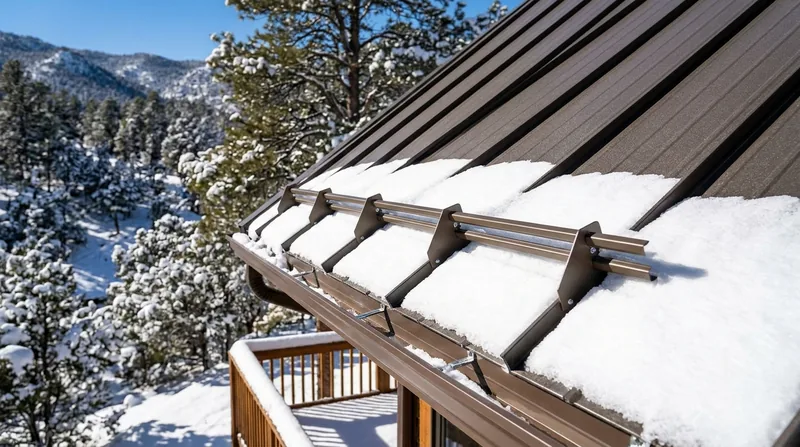




Snow Guards & Ice Protection in Albuquerque
Most Albuquerque metal roofs never need snow guards, and telling you that up front saves you money. But drive east into the Sandia foothills, up toward Cedar Crest, or out to Tijeras and Edgewood, and the story changes fast. At 5,300 feet the city gets light snow that usually melts by afternoon, while the East Mountains hold pack for days and refreeze at night. When that snow and ice lets go off a standing seam roof, it comes down as one sliding slab right over your entry, patio, or parked car. We install Snow Guards & Ice Protection in Albuquerque where the exposure is real, and we tell you honestly when it isn't. If your panels are already lifting from wind or freeze-thaw, start with metal roof repair before adding hardware.
Why Snow Guards Matter More in the Sandia Foothills Than in the Valley
Albuquerque's climate is the whole argument. Thin high-altitude air, intense UV, and wide daily temperature swings mean snow melts and refreezes on metal repeatedly. Standing seam is the slickest roof surface made, so a thawed top layer slides on the frozen base. That failure mode dominates here: not heavy accumulation, but repeated melt-freeze release. A charcoal standing seam roof on a Placitas hillside home with a portal over the front door is a classic candidate. A low-slope R-panel shop roof in the South Valley almost never is.
- Guard placement is set by roof pitch, panel length, and the run below the release point, not by guesswork.
- We size the guard count to the snow load the East Mountains actually see, which runs well above the valley floor.
- We check the panel seam profile first, because clamp-on guards fit some standing seams and not others.
- We flag entries, walkways, patios, and driveways so guards land where the falling load would hurt.
- We inspect fasteners and sealants at the same time, since winter freeze-thaw loosens both.
If your roof is steep, sits above a door or parking spot, and holds snow past midday, it is worth a look. If it sheds clean and drains fast, we will say so.
Key info: A homeowner in Sandia Park with a steep stone-coated steel roof over a gravel drive had ice releasing onto the cars every February. A modest guard layout along the eave stopped it. A comparable ranch roof in Taylor Ranch with the same panels needed nothing, because the pitch and the melt pattern never build a sliding slab.
For the code side, snow load and roof attachment requirements are set locally, and the City of Albuquerque Planning Department is the place to confirm what applies to your address before work starts.
How We Assess and Install Guards on an Albuquerque Metal Roof
We do not sell guard systems by the foot over the phone. Every job starts on the roof, because the right answer depends on panel type, pitch, seam profile, and what sits below the eave. On a standing seam roof in Corrales or Los Ranchos, the guards usually clamp to the seam with no penetration at all. On exposed-fastener R-panel, the approach is different and the fasteners have to be sealed correctly.
- We walk the roof and measure pitch, panel length, and the drop zone below each eave.
- We identify the panel system, whether that is standing seam, corrugated, or stone-coated steel.
- We check seam condition and fastener tightness, since a loose seam will not hold a clamp.
- We lay out guard rows based on local snow load and the areas people walk or park under.
- We install, seal, and torque to spec, then confirm drainage still runs to the gutters.
On steep foothill roofs we often pair the guards with a gutter review, because ice and snow release can tear hangers loose over a season or two. Our gutter work for metal roofs covers that check.
Key info: On a bronze standing seam roof above a portal in Cedar Crest, we clamped guards to the seam with zero penetrations and left the panel warranty intact. On an older corrugated carport in Edgewood, the seams would not take clamps, so we used a bracket system with sealed fasteners instead.
Guard and Rail Options We Install
There is no single product that fits every metal roof. The table below shows the main approaches and where each one belongs. We pick based on your panel system and the snow load your address actually sees.
| Approach | Description | Best for |
|---|---|---|
| Seam-clamp snow guards | Non-penetrating clamps that grip the standing seam and hold snow in place. | Standing seam roofs on homes in the foothills and East Mountains. |
| Surface-mounted guards | Brackets fastened and sealed directly to the panel surface. | Corrugated and R-panel roofs where clamps are not an option. |
| Snow rails and fences | Continuous rail systems that hold a larger snow pack above doors and walkways. | Steep roofs with long panel runs and heavy local snow load. |
| Ice dam and eave review | Inspection of flashing, underlayment, and drainage at the eave line. | Roofs that show ice buildup or water backing up at the edge. |
We match the system to the roof, not the other way around, so the panels keep their warranty and the guards stay put through freeze-thaw cycles.
Snow Guards & Ice Protection Cost in Albuquerque: What to Expect
Most residential guard projects here start around $1,200 and go up from there. A small run over one entry on a modest roof sits near that floor. A full eave layout on a steep standing seam roof in the East Mountains, or a rail system over a long portal, prices higher. The real drivers are roof pitch, total linear feet of guard, panel type, and how high the roof sits above the ground you have to work from.
- Roof pitch and height drive labor, because steep foothill roofs take more time and more safety setup.
- Panel type decides the hardware, and seam clamps cost differently than surface brackets.
- Total linear footage and number of rows set the material count directly.
- Access around the house, including gravel, portals, and landscaping, affects how we stage the work.
- Combining the job with a fastener or sealant check can save a second trip up the roof.
Get two or three estimates and compare scope, not just the number. Our full metal roofing pricing overview shows how guard work fits alongside repair and replacement costs.
Finding a Metal Roofing Contractor Near Albuquerque for Snow Guards
Guard work is small enough that it attracts anyone with a ladder, so vet the contractor the same way you would for a full replacement. Ask for the license and insurance certificate, and confirm the coverage is current. Get more than one written estimate with the guard count and hardware named. Ask for local references on metal roofs, not shingle roofs.
- Confirm the contractor is licensed and insured, and ask to see the certificate.
- Get two or three written estimates that list guard type, row count, and fastener method.
- Check references from metal roof jobs in your part of town, foothills included.
- Ask who pulls the permit if your jurisdiction requires one, and confirm it before work starts.
- Check HOA design rules first, since some subdivisions restrict visible roof hardware.
When you are ready to get a real number, contact us for a free estimate and we will tell you plainly whether your roof needs guards at all.
Snow Guards & Ice Protection in Albuquerque: Pricing Guide
| Service | Price | Details |
|---|---|---|
| Entry and walkway guard run | Starting at $1,200 | Short guard run over one door or walkway, including layout and sealed installation. |
| Full eave guard layout | Starting at $2,400 | Guards along the full eave line, priced by linear feet and panel seam type. |
| Snow rail or fence system | On estimate | Continuous rail systems need an on-site look at pitch, panel length, and snow load. |
| Guard plus fastener and sealant check | Starting at $1,600 | Guard installation combined with a fastener torque and sealant inspection on the same visit. |
| Travel | Included | in Albuquerque and surrounding areas, no separate call-out or mileage fee |
| Estimate | Free | Response within 24h at (505) 420-5488, no obligation to book |
Indicative pricing, the exact cost depends on square footage, finish, and site access. Free personalized estimate within 24h at (505) 420-5488.


